
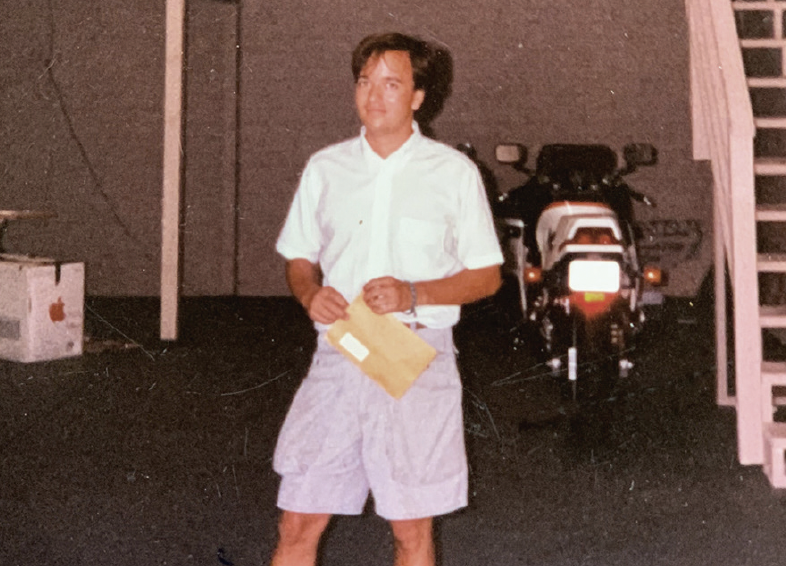
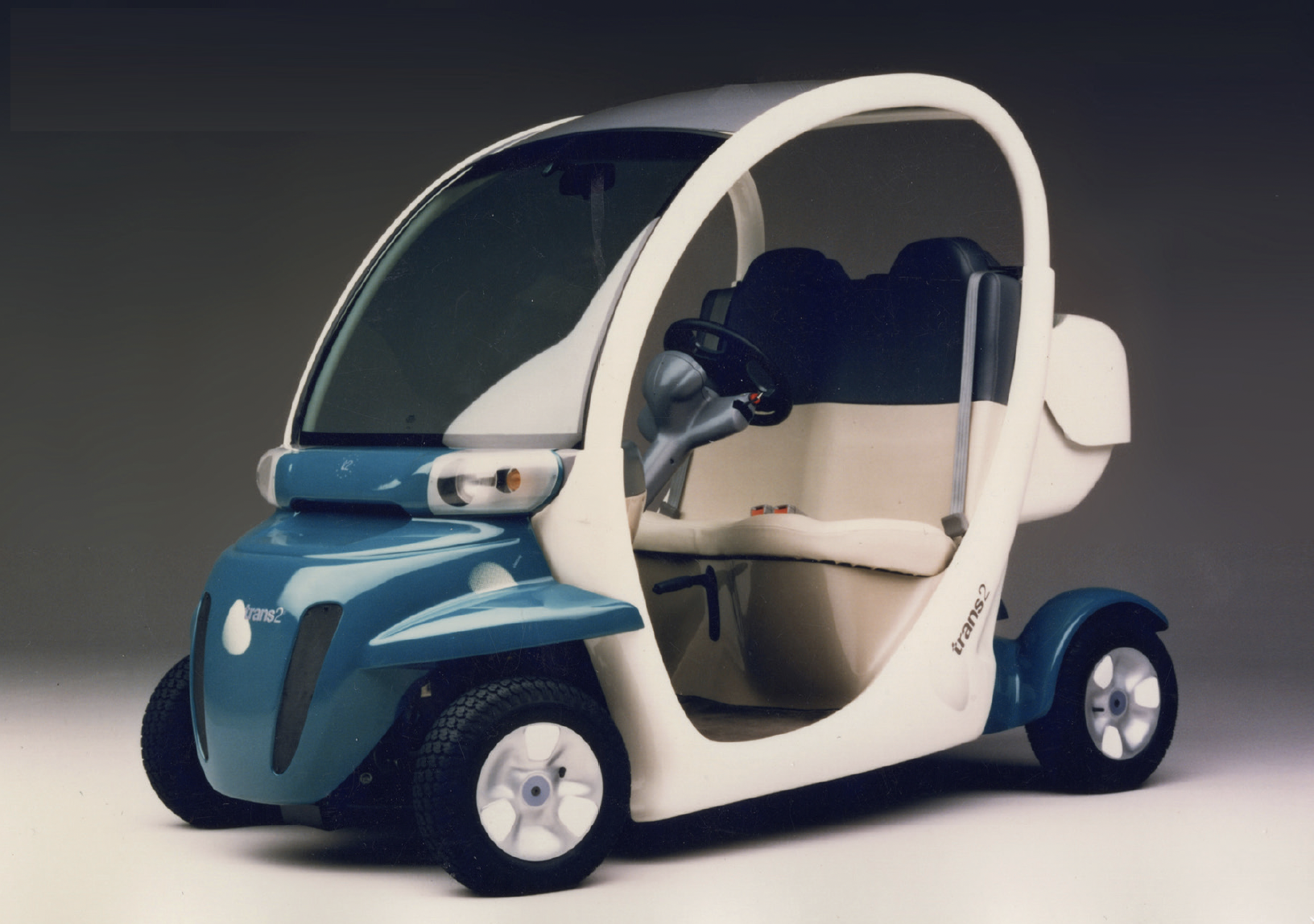
I started my company trans2 in 1988 to bring a new type of “intermediate” vehicle to market.
Our Neighborhood Electric Vehicle reached production in 1995.
They’re still in production today by a company called GEM.
I was 16 years old living in Boulder Colorado, going to high school. Boulder is a nice college town nestled against the eastern face of the Rocky Mountains. As a complete car nut growing up, I bought my first car while only 15 years old. That car had problems so I sold it and bought another used car. My second car was even worse. I decided to buy a Vespa scooter. This was transportation I could actually afford to use and maintain.
My Vespa had a top speed of 45 mph, and allowed me to get anywhere in Boulder. It was a sensible vehicle. I had no interest in higher-speed motorcycles, which were more dangerous than my Vespa. But it was a struggle to ride my Vespa on cold windy days, in the rain, and even on some snowy days. I would have to go very slow and have my feet just above the snowy road in case my Vespa slipped.
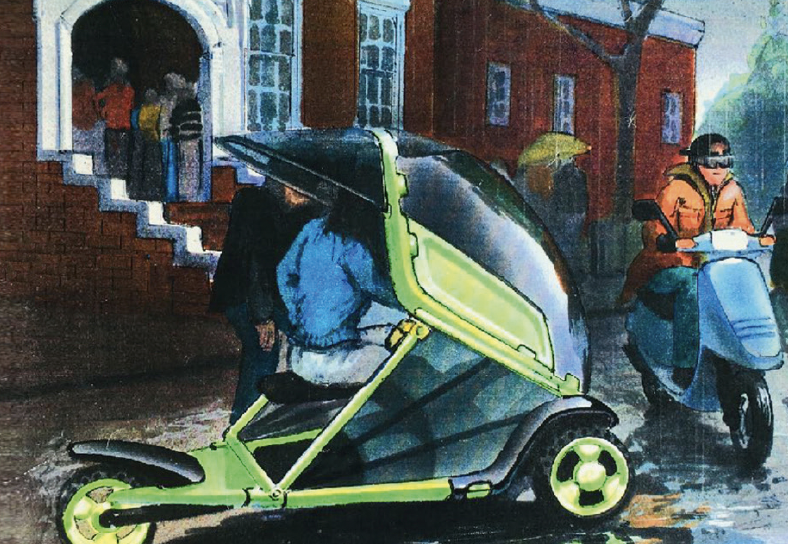
My Vespa was inexpensive and convenient to own and ride. But I was frustrated that there was no way to add a roof to it, or attach side weather enclosures, or add the ability to carry more cargo, such as a few grocery bags. I imagined going to a nearby car dealer and asking if I could buy the least expensive car on the lot—but that I would not need the doors nor the bumpers. Such a stripped down car would still offer more utility and safety than my Vespa. The car dealer might have said, “no, we can’t sell you that car because it would be unsafe”. Then I imagined there was a motorcycle dealer across the street, with many brands of motorcycles, all with top speeds above 150 mph. The gap in available functional vehicles made no sense to me at all.
A Vespa with a roof and side weather enclosures, and an ability to carry more cargo, seemed to be a very sensible and economical personal transportation solution for where I lived. After high school I went to Pasadena, California to attend the Art Center College of Design to become a car designer. Most of the focus at the college was designing full size automobiles. But I remained interested in potentially addressing the significant gap in vehicle sizes and functions—between the small motor scooter and the much larger more expensive automobile.
THE FULL STORY OF HOW I CREATED THE FIRST U.S. NEIGBORHOOD ELECTRIC VEHCILE IS AVAILABLE IN MY BOOK, NEAR TO FAR.